
 Healthcare Professionals




Are Refrigerated Probiotics Better? Why Refrigeration Exemplifies Quality
Consumers know that probiotics are good for their health and are increasingly concerned with making sure they are taking the best one. Pharmacists know that refrigerated probiotics exemplify quality because they maintain their potency levels, providing maximum effectiveness. Here are the questions we hear most often about refrigeration, and what the research says.
Are refrigerated probiotics better than shelf-stable probiotics?
Refrigeration protects potency. Probiotics are live bacteria, and when left unrefrigerated the cells naturally die off at a faster rate. Research has shown that to be effective, probiotic supplements must contain billions of live cultures, and refrigeration is the most reliable way to keep those cultures alive from the time a product is manufactured until the time it is taken.
Shelf-stable products rely on encapsulation technology and naturally robust strains to survive at room temperature. The Council for Responsible Nutrition notes that such products are often manufactured with sufficient overages to ensure the claimed quantity at the end of shelf life — in other words, they start with more bacteria than the label lists, anticipating significant die-off. With Florajen’s Cold Chain Commitment™, there is no need to guess: our refrigerated capsules maintain consistent cell counts through the expiration date.
Why do probiotics need to be refrigerated?
Because heat and humidity kill live bacteria. When probiotics sit on the store shelf at room temperature, they lose their potency as the live cultures die off. Refrigeration dramatically slows the rate of cell death, so the number of live cells on the label is still the number of live cells in the capsule when you take it.
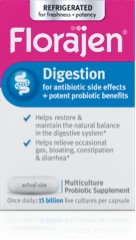
According to the International Probiotics Association, non-encapsulated probiotics show significant viability reduction at room temperature; one study found that by the fifth week at room temperature, almost no viable cells remained. The NIH Office of Dietary Supplements notes that probiotic viability depends heavily on strain type, processing methods, and storage conditions. Bifidobacterium strains, found in Florajen Digestion, are particularly sensitive to heat and moisture, which makes refrigeration especially important for multi-strain formulas.
What makes a refrigerated probiotic a sign of quality?
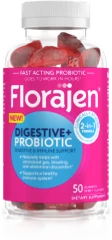
A refrigerated probiotic tells you the manufacturer has committed to keeping the product cold at every step, not just in your refrigerator at home. Florajen Probiotics are known for having the right strains at the right cell counts and maintaining a Cold Chain Commitment™: keeping their probiotics refrigerated, fresh and potent from time of manufacture to time of purchase. That is why you will find Florajen in the pharmacy refrigerator rather than on the shelf.
How long can refrigerated probiotics stay out of the fridge?
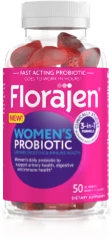
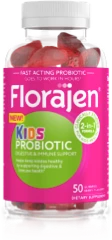
Florajen refrigerated probiotics can be stored at room temperature for up to two weeks and still maintain effectiveness, so short trips are worry-free. For travel, lunchboxes, or anyone who prefers not to refrigerate, Florajen also offers a Complete Wellness line of shelf-stable Triple Action capsules and probiotic gummies made with RealStable™ Technology, clinically shown to maintain freshness and potency without refrigeration. Read more in Why You Should Take Refrigerated Probiotics.
Where can I buy refrigerated probiotics?
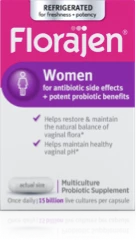
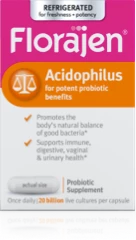
Florajen refrigerated probiotics are available at Walgreens stores nationwide and at other pharmacies and retailers; use our store locator to find one near you. If you are a pharmacist or technician, you may notice Florajen in your pharmacy refrigerator: three SKUs in the Florajen line, Florajen Digestion 60 count, Florajen Women 30 count, and Florajen Acidophilus 60 count, are part of the “Ask Your Pharmacist” planogram and are auto-replenished, while all Florajen SKUs remain available to order.
When pharmacy customers come to you with questions about their prescription medication, what better way to help them avoid the unpleasant side effects of antibiotics than to offer quality refrigerated probiotics? Florajen Probiotics help restore the good flora and maintain the natural bacterial ratio the body needs to stay healthy. Often recommended by healthcare professionals for concomitant use with antibiotics, Florajen Probiotics help patients feel better, while getting better.
Learn more about the safe, effective, and affordable refrigerated probiotics that were founded by bacteriologists over 25 years ago at www.florajen.com.
*These statements have not been evaluated by the Food and Drug Administration. These products are not intended to diagnose, treat, cure or prevent any disease.
*These statements have not been evaluated by the Food and Drug Administration. These products are not intended to diagnose, treat, cure or prevent any disease.
CLINICAL REFERENCES:
- Segers ME, Lebeer S. Towards a better understanding of Lactobacillus rhamnosus GG - host interactions. Microbial Cell Factories. 2014;13(Suppl 1):S7. doi:10.1186/1475-2859-13-S1-S7. [LINK https://www.ncbi.nlm.nih.gov/pmc/articles/PMC4155824/ ]
- Sugahara H, et al. Probiotic Bifidobacterium longum alters gut luminal metabolism through modification of the gut microbial community. Scientific Reports 5, Article number: 13548 (2015) [LINK http://www.nature.com/articles/srep13548 ]
- Kirjavaninen et al. Aberrant composition of gut microbiota of allergic infants. FEMS Immunol Med Microbiol. 2001;32;1. https://www.ncbi.nlm.nih.gov/pmc/articles/PMC1773282/
Bjorksten et al. The intestinal microflora in allergic Estonian and Swedish infants. Clin Exp Allergy. 1999;29:342. - McFarland LV. Epidemiology, risk factors and treatments for antibiotic-associated diarrhea. Dig Dis. 1998;16(5):292-307
https://www.ncbi.nlm.nih.gov/pubmed/9892789 - Waigankar SS, Patel V. Role of probiotics in urogenital healthcare. Journal of Mid-Life Health. 2011;2(1):5-10. doi:10.4103/0976-7800.83253.
https://www.ncbi.nlm.nih.gov/pmc/articles/PMC3156505/
and
Vásquez A, Jakobsson T, Ahrné S, Forsum U, Molin G. Vaginal Lactobacillus Flora of Healthy Swedish Women. Journal of Clinical Microbiology. 2002;40(8):2746-2749. doi:10.1128/JCM.40.8.2746-2749.2002.
https://www.ncbi.nlm.nih.gov/pmc/articles/PMC120688/ - Wright JJ, Paauw DP. Complications of Antibiotic Therapy. Medical Clinics of North America; July 2013, 97(4): 667–679.
http://www.medical.theclinics.com/article/S0025-7125(13)00029-1/abstract - Vanderhoof J.A., et al . Lactobacillus GG in the prevention of antibiotic-associated diarrhea in children. J Pediatr. 1999;135(5):564-568.
https://www.ncbi.nlm.nih.gov/pubmed/10547243 - “ A.G. Mohamed, Hayam M. Abbas, Abeer F. Zayan and Nayra Sh. Mehanna, 2016. Bacterial Strains as Vitamins Supplements to Prepare Functional Dairy Beverages. American Journal of Food Technology, 11: 234-239. https://scialert.net/fulltextmobile/?doi=ajft.2016.234.239
- Probiotics, What’s the Bottom Line. National Center for Complementary and Integrative Health, National Institutes of Health website. Accessed April 2, 2017 https://www.nccih.nih.gov/health/probiotics-what-you-need-to-know
- Kim SE, et al. Change of Fecal Flora and Effectiveness of the Short-term VSL#3 Probiotic Treatment in Patients With Functional Constipation. Constipation Research group of Korean Society of Neurogastroenterology and Motility. J Neurogastroenterol Motil. 2015 Jan 1;21(1):111-20. doi: 10.5056/jnm14048. https://www.ncbi.nlm.nih.gov/pubmed/25537674
- Probiotics May Ease Constipation. Harvard Health Publications, Harvard Medical School website. Accessed April 4, 2017 http://www.health.harvard.edu/blog/probiotics-may-ease-constipation-201408217377
- Dimidi E, et al. The effect of probiotics on functional constipation in adults: a systematic review and meta-analysis of randomized controlled trials. The American Journal of Clinical Nutrition. August 6, 2014, doi:3945/ajcn.114.089151 https://ajcn.nutrition.org/article/S0002-9165(23)04789-5/fulltext
- Khalif IL, et al. Alterations in the colonic flora and intestinal permeability and evidence of immune activation in chronic constipation. Dig Liver Dis. 2005 Nov; 37(11):838-49. https://www.ncbi.nlm.nih.gov/pubmed/16169298
and
Barbara G, et al. Interactions between commensal bacteria and gut sensorimotor function in health and disease. Am J Gastroenterol.2005 Nov;100(11):2560-8. https://www.ncbi.nlm.nih.gov/pubmed/16279914 - Miller LE, Ouwehand AC. Probiotic supplementation decreases intestinal transit time: meta-analysis of randomized controlled trials. World J Gastroenterol. 2013 Aug 7; 19(29):4718-25. https://www.ncbi.nlm.nih.gov/pubmed/23922468
- Cha BK, et al. The effect of a multispecies probiotic mixture on the symptoms and fecal microbiota in diarrhea-dominant irritable bowel syndrome: a randomized, double-blind, placebo-controlled trial. J Clin Gastroenterol. 2012;46:220–227. doi: 10.1097/MCG.0b013e31823712b1.
and
Whorwell PJ, Altringer L, Morel J, et al. Efficacy of an encapsulated probiotic Bifidobacterium infantis 35624 in women with irritable bowel syndrome. Am J Gastroenterol. 2006;101:1581–1590. doi: 10.1111/j.1572-0241.2006.00734.x. - MedlinePlus, U.S. National Library of Medicine website. Accessed April 4, 2017 https://medlineplus.gov/diarrhea.html
- Using Probiotics for Diarrhea. WebMD website. Accessed April 4, 2017 http://www.webmd.com/digestive-disorders/probiotics-diarrhea#1
-
McFarland LV. Meta-analysis of probiotics for the prevention of traveler's diarrhea. Travel Med Infect Dis. 2007 Mar;5(2):97-105.
https://www.ncbi.nlm.nih.gov/pubmed/17298915
and
Traveler’s Diarrhea. Centers for Disease Control and Prevention website. Accessed March 31, 2017. https://wwwnc.cdc.gov/travel/yellowbook/2016/the-pre-travel-consultation/travelers-diarrhea - How to Prevent Diarrhea While You Take Antibiotics. Cleveland Clinic website. Accessed April 4, 2017 https://health.clevelandclinic.org/how-to-prevent-diarrhea-while-you-take-antibiotics
- Infectious diarrhea: Can probiotics help against diarrhea? PubMed Health, U.S. National Library of Medicine website. Accessed April 4, 2017. https://www.ncbi.nlm.nih.gov/pubmedhealth/PMH0088733/
- Based on market survey conducted by American Lifeline December 2016.
- Could Probiotics Help Alleviate your Functional Gastrointestinal Symptoms? International Foundation for Functional Gastrointestional Disorders website. Accessed April 4, 2017. https://www.iffgd.org/diet-treatments/could-probiotics-help-your-symptoms.html
- Kim HJ, et al. A randomized controlled trial of a probiotic, VSL#3, on gut transit and symptoms in diarrhoea-predominant irritable bowel syndrome. Aliment Pharmacol Ther (2003)17: 895–904. https://www.ncbi.nlm.nih.gov/pubmed/12656692
- Kim HJ, et al. A randomized controlled trial of a probiotic combination VSL# 3 and placebo in irritable bowel syndrome with bloating. Neurogastroenterol Motil (2005)17: 687–696. https://www.ncbi.nlm.nih.gov/pubmed/16185307
- Supplements for IBS: What Works? WebMD website. Accessed April 4, 2017 http://www.webmd.com/ibs/features/supplements-for-ibs-what-works#1
- Bloating 101: Why You Feel Bloated. WebMD website. Accessed April 4, 2017 http://www.webmd.com/digestive-disorders/diarrhea-10/bloated-bloating
- Health benefits of taking probiotics. Harvard Health Publications, Harvard Medical School website. Accessed March 31, 2017. http://www.health.harvard.edu/vitamins-and-supplements/health-benefits-of-taking-probiotics
- Survey of full-time U.S. pharmacists who stock Florajen, by DMD Healthcare Research, December 2015.
- Jiang, W., Ni, B., Liu, Z. et al. The Role of Probiotics in the Prevention and Treatment of Atopic Dermatitis in Children: An Updated Systematic Review and Meta-Analysis of Randomized Controlled Trials. Pediatr Drugs 22, 535–549 (2020). https://doi.org/10.1007/s40272-020-00410-6
- Tan‐Lim, CSC, Esteban‐Ipac, NAR, Mantaring, JBV, et al. Comparative effectiveness of probiotic strains for the treatment of pediatric atopic dermatitis: A systematic review and network meta‐analysis. Pediatr Allergy Immunol. 2021; 32: 124– 136. https://doi.org/10.1111/pai.13305
- M. Alexander Otto. “Yeast Infection Four Times as Likely with Penicillin Use.” Clinician Reviews, 13 Dec. 2016, https://www.mdedge.com/clinicianreviews/article/77427/infectious-diseases/yeast-infection-four-times-likely-penicillin-use?sso=true.
- Navarro-López V, Ramírez-Boscá A, Ramón-Vidal D, et al. Effect of Oral Administration of a Mixture of Probiotic Strains on SCORAD Index and Use of Topical Steroids in Young Patients With Moderate Atopic Dermatitis: A Randomized Clinical Trial. JAMA Dermatol. 2018;154(1):37–43. doi:10.1001/jamadermatol.2017.3647
- Yan F, Polk DB. Probiotics and immune health. Curr Opin Gastroenterol. 2011 Oct;27(6):496-501. doi: 10.1097/MOG.0b013e32834baa4d. PMID: 21897224; PMCID: PMC4006993. https://pubmed.ncbi.nlm.nih.gov/21897224/
- Hanifin JM, Reed ML; Eczema Prevalence and Impact Working Group. A population-based survey of eczema prevalence in the United States. Dermatitis. 2007 Jun;18(2):82-91. doi: 10.2310/6620.2007.06034. PMID: 17498413.
- Eczema Prevalence, Quality of Life and Economic Impact.” National Eczema Association, 16 Mar. 2021, https://nationaleczema.org/research/eczema-facts/.
- Elizabeth Campbell and Allen Sayler. “Medical Foods – Insights Into FDA's Interpretation and Enforcement.” Food Safety RSS, Food Safety, 6 Mar. 2018, https://www.food-safety.com/articles/5701-medical-foods-insighte28099s-into-fdae28099s-interpretation-and-enforcement.
- Simpson EL, Guttman-Yassky E, Margolis DJ, et al. Association of Inadequately Controlled Disease and Disease Severity With Patient-Reported Disease Burden in Adults With Atopic Dermatitis. JAMA Dermatol. 2018;154(8):903-912.
- Wei W, Anderson P, Gadkari A, et al. Extent and consequences of inadequate disease control among adults with a history of moderate to severe atopic dermatitis. J Dermatol. 2018;45(2):150-157.
- Study finds 1,000 species of bacteria on healthy human. Los Angeles Times website. https://www.latimes.com/archives/la-xpm-2009-may-29-sci-skin-bacteria29-story.html. Accessed April 13, 2021.
- Segers ME, Lebeer S. Towards a better understanding of Lactobacillus rhamnosus GG – host interactions. Microbial Cell Factories. 2014;13(Suppl 1):S7. doi:10.1186/1475-2859-13-S1-S7. https://www.ncbi.nlm.nih.gov/pmc/articles/PMC4155824/.
- Hill D, Sugrue I, Tobin C, Hill C, Stanton C, Ross RP. The Lactobacillus casei Group: History and Health Related Applications. Front Microbiol. 2018;9:2107. Published 2018 Sep 10. doi:10.3389/fmicb.2018.02107
- Chyn Boon Wong, Toshitaka Odamaki, Jin-zhong Xiao, Beneficial effects of Bifidobacterium longum subsp. longum BB536 on human health: Modulation of gut microbiome as the principal action, Journal of Functional Foods, Volume 54, 2019, Pages 506-519, ISSN 1756-4646, https://doi.org/10.1016/j.jff.2019.02.002.
- Sugahara H, et al. Probiotic Bifidobacterium longum alters gut luminal metabolism through modification of the gut microbial community. Scientific Reports 5, Article number: 13548 (2015) http://www.nature.com/articles/srep13548
SURVEY & TRIAL REFERENCES:
- #1 Pharmacist Recommended Probiotic based on 2025 IQVIA physician survey data
- Florajen Balance Study Data and Consensus Meeting, February 5, 2019, convened with Healthcare Professionals in the following specialties: Gastroenterology, Pediatric Gastroenterology, Obstetrics and Gynecology, Internal Medicine, Retail Pharmacy, Hospital Clinical Pharmacy